
What is mechanical servicing?
Mechanical watch servicing is the main task of every watchmaker, the heart of our work and the central point of every maintenance intervention on a mechanical watch.

The importance of servicing in watchmaking
The skill of a good watchmaker is measured precisely in this specific activity: servicing the watch movement. It is the work for which we are trained, assessed and certified, and it is what fuels the passion of every watchmaking professional. Not by chance, every mechanical service within an intervention passes through this point.
Mechanical servicing at Ancré Lab
At Ancré Lab, the specialized watchmaker, holder of three official qualifications issued by manufacturers such as Omega, TAG Heuer and Zenith, performs mechanical servicing with rigour and meticulous attention, following a structured process compliant with the standards of the leading watchmaking maisons.


Stages of watch movement servicing
Although the distinction between the repair and the servicing of a mechanical watch can often be subtle, the complete servicing process for each timepiece includes the following steps:
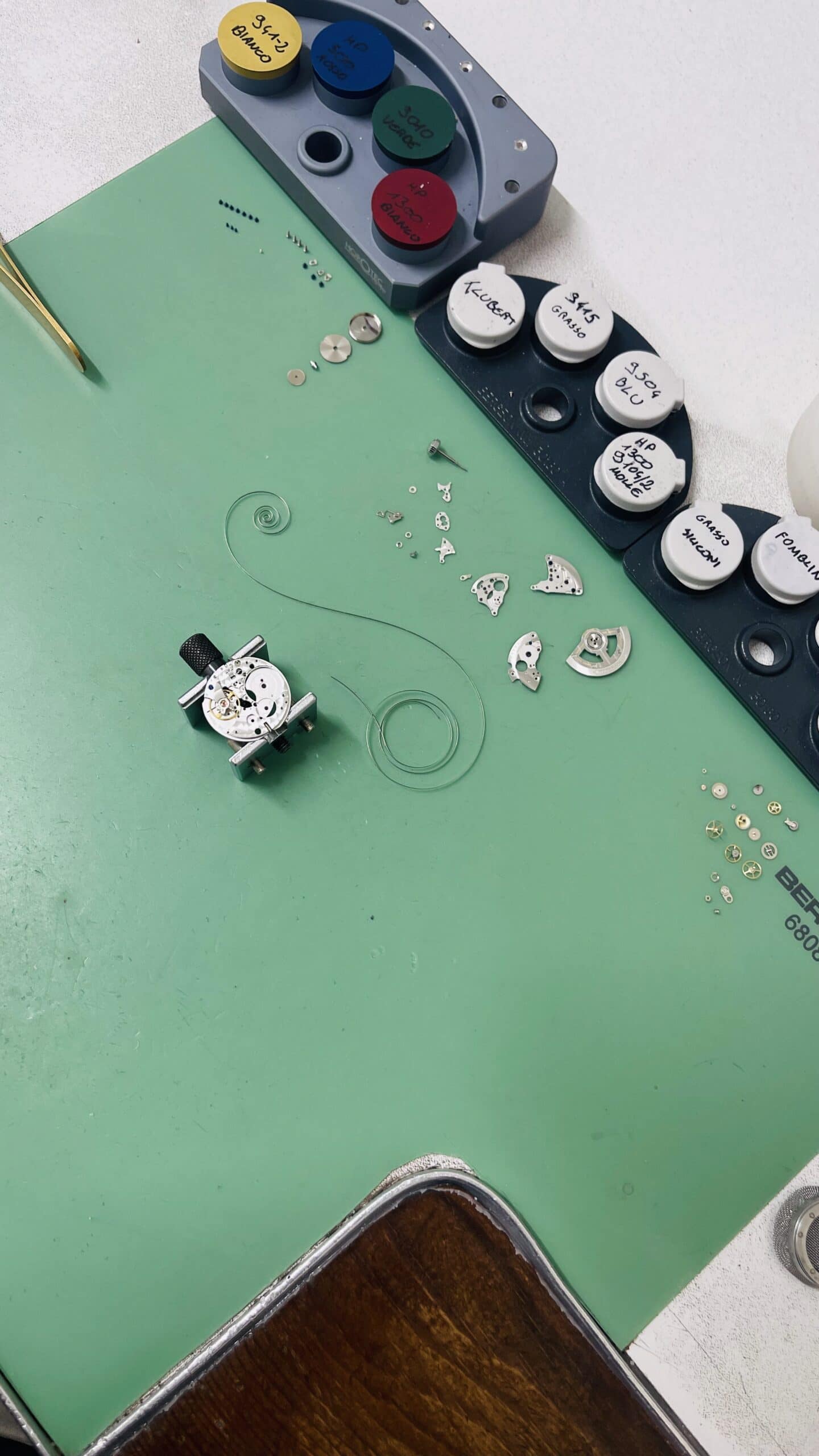
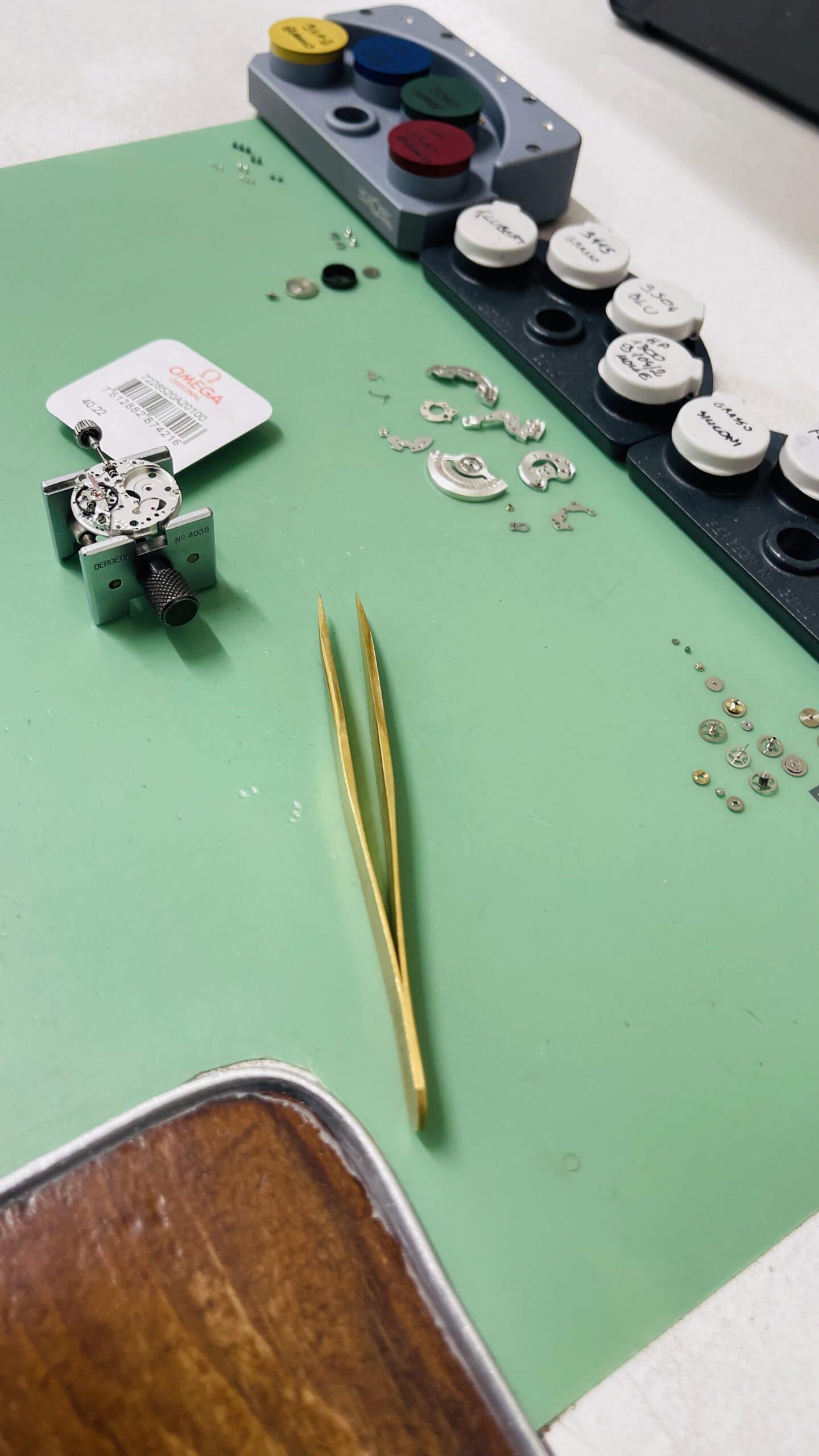
- Complete disassembly of the mechanism and initial assessment of the integrity of each component;
- Opening of the barrel and removal of the mainspring;
- Washing of the fully disassembled mechanism in a dedicated movement-cleaning machine, using specific liquids;
- Detailed inspection of the movement components and replacement of damaged or excessively worn parts where necessary;
- Checking wheel endshake and adjusting jewel heights according to manufacturer instructions;
- Replacement of mainspring, reverser and any mechanical updates according to manufacturer rules, subject to availability of original spare parts;
- Immersion of the escapement in EPILAME liquid to optimize lubrication over time and guarantee stability at critical points;
- Reassembly and lubrication of all components with specific MOEBIUS brand lubricants, selected according to each component’s function;
- Escapement lubrication under the microscope;
- Specific checking and lubrication of the balance jewels
- Demagnetization of the movement;
- Rate check, movement calibration and timing adjustment using a dedicated electronic timing machine;
- Resting of the movement for 24 hours to allow lubricants to distribute correctly;
- After 24 hours, parameter check, calibration and final regulation of the movement


Precision and standards in mechanical servicing
Every stage of the service is performed with precision and discipline, ensuring a result consistent with manufacturer standards and optimal long-term performance.
